

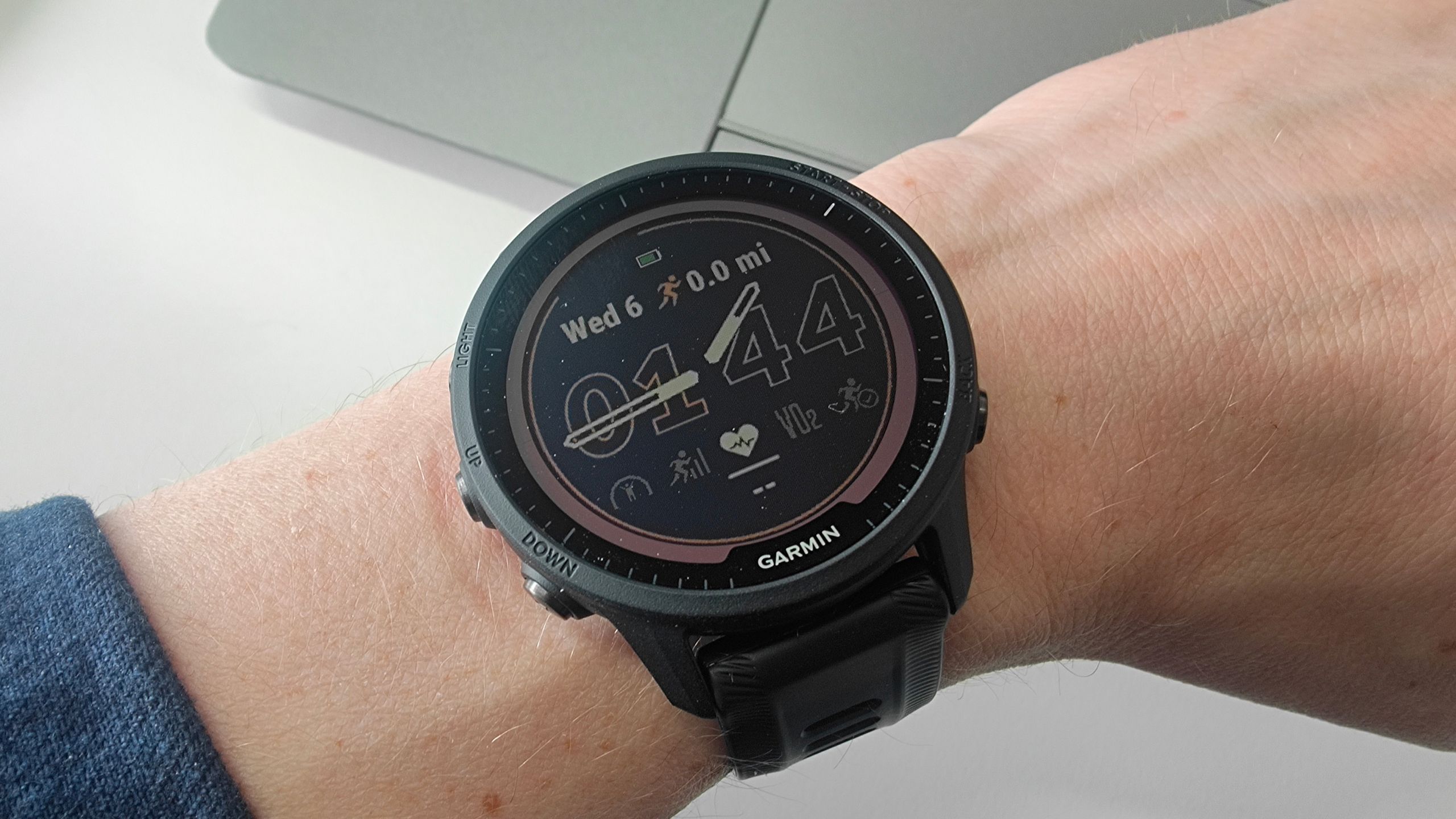
Garmin has no immediate plan to drop memory-in-pixel (MIP) displays, according to COO Brad Trenkle. He told TechRadar that MIP’s battery-life advantage remains significant, particularly for watches used on multi-day hikes.
OLED screens use more power outdoors because they need to increase brightness in strong ambient light. MIP displays become easier to read in those conditions while using little power. Garmin’s OLED Fenix 9 Pro can reach 3,000 nits, but its always-on display mode can reduce battery life.
Trenkle said the battery-life gap between OLED and MIP has narrowed as Garmin’s OLED products improve, but has not closed. He said MIP will remain until that gap is gone.
Garmin’s recent Forerunner watches, from the Forerunner 70 to the 970, do not offer MIP. The display technology remains in specialist models such as the Fenix 9 Pro Solar and Instinct 3 Solar, where it is paired with solar charging.
Trenkle said OLED could potentially work with crystalline silicon solar technology, which places solar cells in the watch’s outer chapter ring rather than over the active display. He said that approach could avoid reducing display reflectivity or image quality. His comments describe a possible approach, not a confirmed Garmin product.
Comments
0No comments yet. Be the first to comment.