

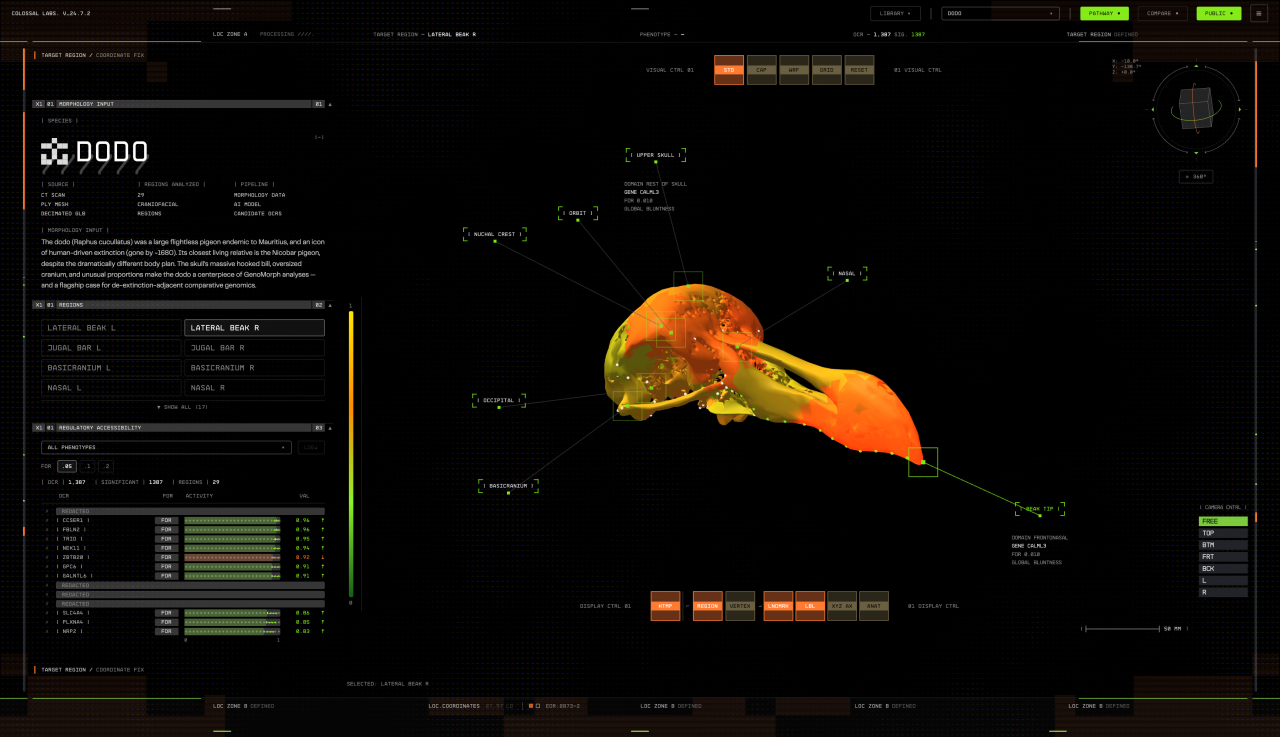
Colossal Biosciences has announced GenoMorph, an AI platform designed to help identify genetic changes for its de-extinction research. The company is using it in work on the dodo, for which it has only one genome, compared with 100 genomes available for its woolly mammoth project.
CEO and co-founder Ben Lamm told TechCrunch that GenoMorph combines developmental data from chickens, quail, ducks and pigeons with genetic information and 3D skull measurements from more than 70 bird species. He said development took more than a year. The system predicts DNA regions that may relate to traits such as the dodo’s beak and facial structure. Colossal has identified approximately 2,300 potential DNA-editing targets for dodo cranial facial morphology, which it plans to test in a lab.
Lamm said GenoMorph does not edit genes. Colossal is also developing a system that uses lipid nanoparticles to deliver gene-editing tools into developing bird embryos, allowing researchers to study effects without waiting through a full breeding cycle.
The company said its Nicobar pigeon colony now has 36 birds and that it has created cells that develop into eggs and sperm. The Nicobar pigeon is the dodo’s closest living relative, according to Lamm. Separately, investor Peter Diamandis announced NeoGenesis Capital, a venture firm intended to back companies using Colossal’s programmable biology platform in health, agriculture and conservation.
Comments
0No comments yet. Be the first to comment.