

As AI researchers gather in Malmö, Lund University professor Kalle Åström points to robotics as a major next step for image and language models. His work connects AI research to the physical world.
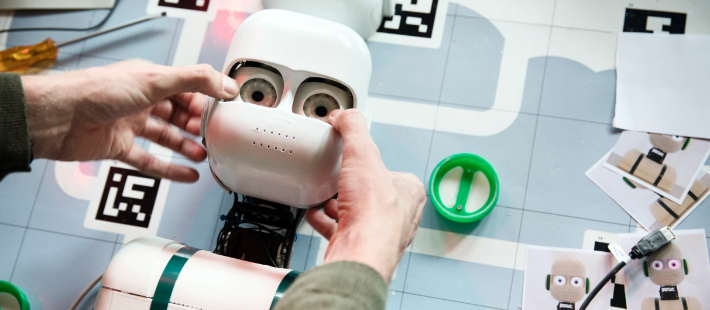
A service robot equipped with a camera, speaker and radio antenna collected images, sounds and radio signals while moving indoors. The data supported LuViRA, research material that Åström helped develop. It allows researchers to compare positioning methods based on images, sound and radio, and to study how information from several sensors can be combined.
Åström says advances in image and language models are also influencing 3D and robotics. Researchers are examining how systems can predict what happens when a robot moves or interacts with a person. Embodied AI describes systems that interact with their surroundings, while vision-language-action models connect visual information and spoken or written instructions to actions.
Åström is one of the organizers of the European Conference on Computer Vision, or ECCV, held in Malmö on 8–12 September. Lund University says the event brings together about 6,000 participants.
He also says companies are reconsidering how they organize work and what skills they need as AI changes coding, text production and image creation. Leaders must consider whether employees’ skills will remain relevant in ten or twenty years.
Comments
0No comments yet. Be the first to comment.