

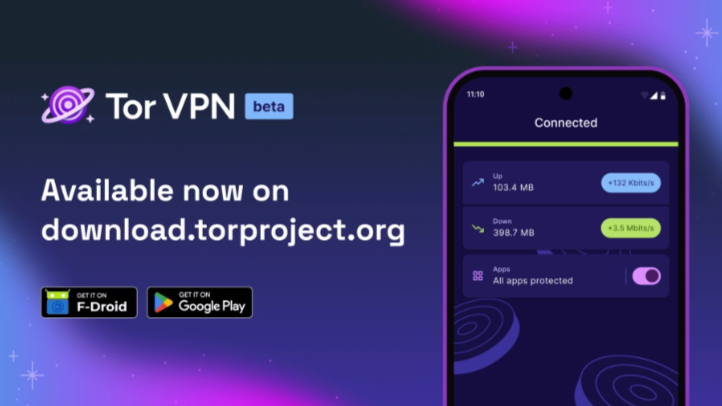
Tor VPN Beta has reached one year since its soft launch, with the Tor Project focusing on anti-censorship tools and stability. The Android-only app extends Tor’s privacy protections across an entire device instead of limiting them to a browser.
Each app receives its own Tor circuit and exit IP, creating what the Tor Project calls per-app pseudonymity. The app runs on Arti, Tor’s next-generation implementation written in Rust. Onionmasq provides the Rust-based tunnelling layer that captures device traffic and sends it through the Tor network.
Much of the past year has focused on reducing crashes and improving behavior as network conditions change. The project also passed a Cure53 penetration test, which found no fundamental flaws in how Tor VPN routes traffic or builds its tunnels, while identifying lower-level issues for patching.
For circumvention, Tor VPN added WebTunnel bridges that disguise Tor traffic as ordinary encrypted web traffic. Engagement has been strongest in heavily censored regions such as Iran and Turkmenistan. The project also made its builds reproducible and released the app through F-Droid.
The roadmap includes further circumvention work, interface changes, more Arti performance features, and a redesign of exit selection. Tor VPN remains beta software, and the Tor Project says it is not yet suitable for high-risk users. One hands-on test measured speeds of 3 to 4 Mbps, and some Android device identifiers can still leak.
Comments
0No comments yet. Be the first to comment.