

Nikon is reviewing the winning entry in its annual Small World In Motion microscopy contest after scientists questioned whether the video was made using artificial intelligence (AI). The contest accepts photographs and videos made with powerful microscopes and has run for 15 years.
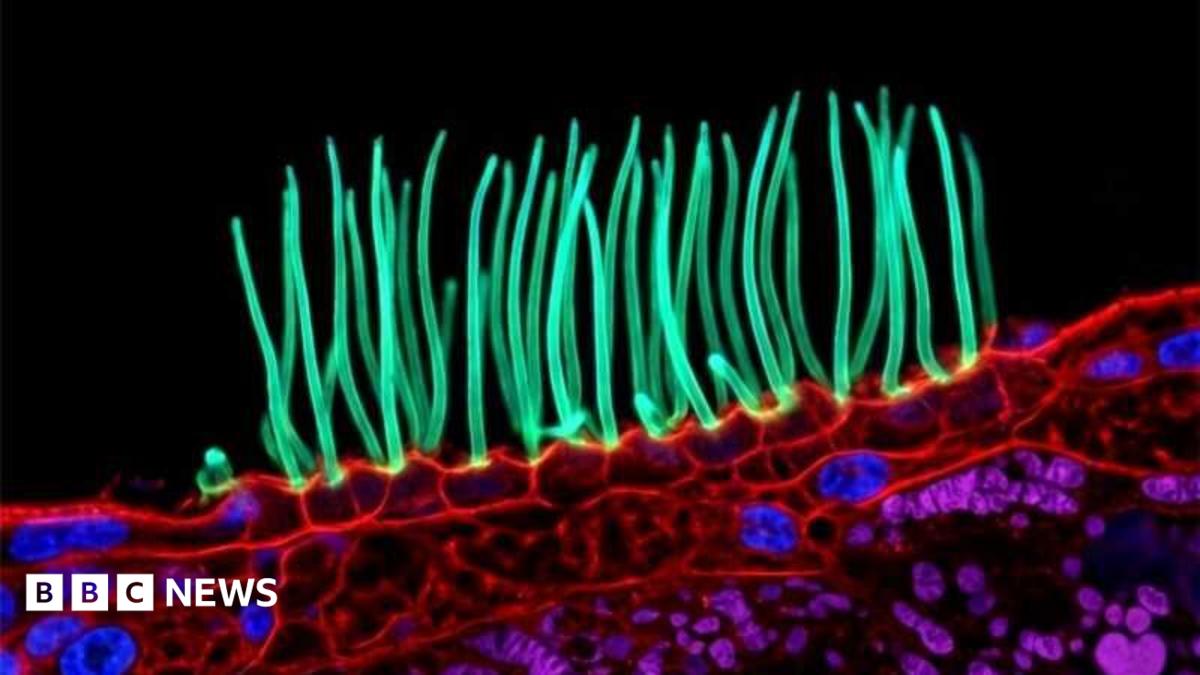
The winning video, submitted by Dr Ning Xu, a researcher at Tsinghua University in China, is said to show cilia—tiny, hair-like structures—moving in the airways of a child with a rare disease. Xu denied breaking the contest rules in an online response to Nikon. He said AI was not used to generate the experimental movie, the cilia or their motion, but acknowledged using it to distinguish and visualize features in reconstructed grayscale images.
Other scientists have questioned shapes and movements in the video, saying some appear inconsistent with normal cell structures or behaviour and that the cilia look too large. Edward Phelps, an associate professor at Florida University, said some structures “pop in and out of existence.” Ian Donovan, a PhD student at UT Southwestern Medical Centre, said the source image appeared to have a watermark indicating it was AI-generated. Two former judges also raised concerns about whether the image was real.
Nikon said Xu was cooperating with its investigation and had provided technical documents. The company said it did not currently see evidence of rule violations and would provide an update soon. The rules prohibit using generative AI to produce images, according to Dr Patrick Hickey, who placed fifth in the 2026 Small World contest. He said the award’s recognition mattered more to him than its $3,000 (£2,250) prize, while adding that an unfairly altered winning video would disadvantage other entrants.
Comments
0No comments yet. Be the first to comment.