

Nikon is reviewing a video that won first prize in its annual Small World in Motion competition after scientists questioned whether artificial intelligence affected the footage.
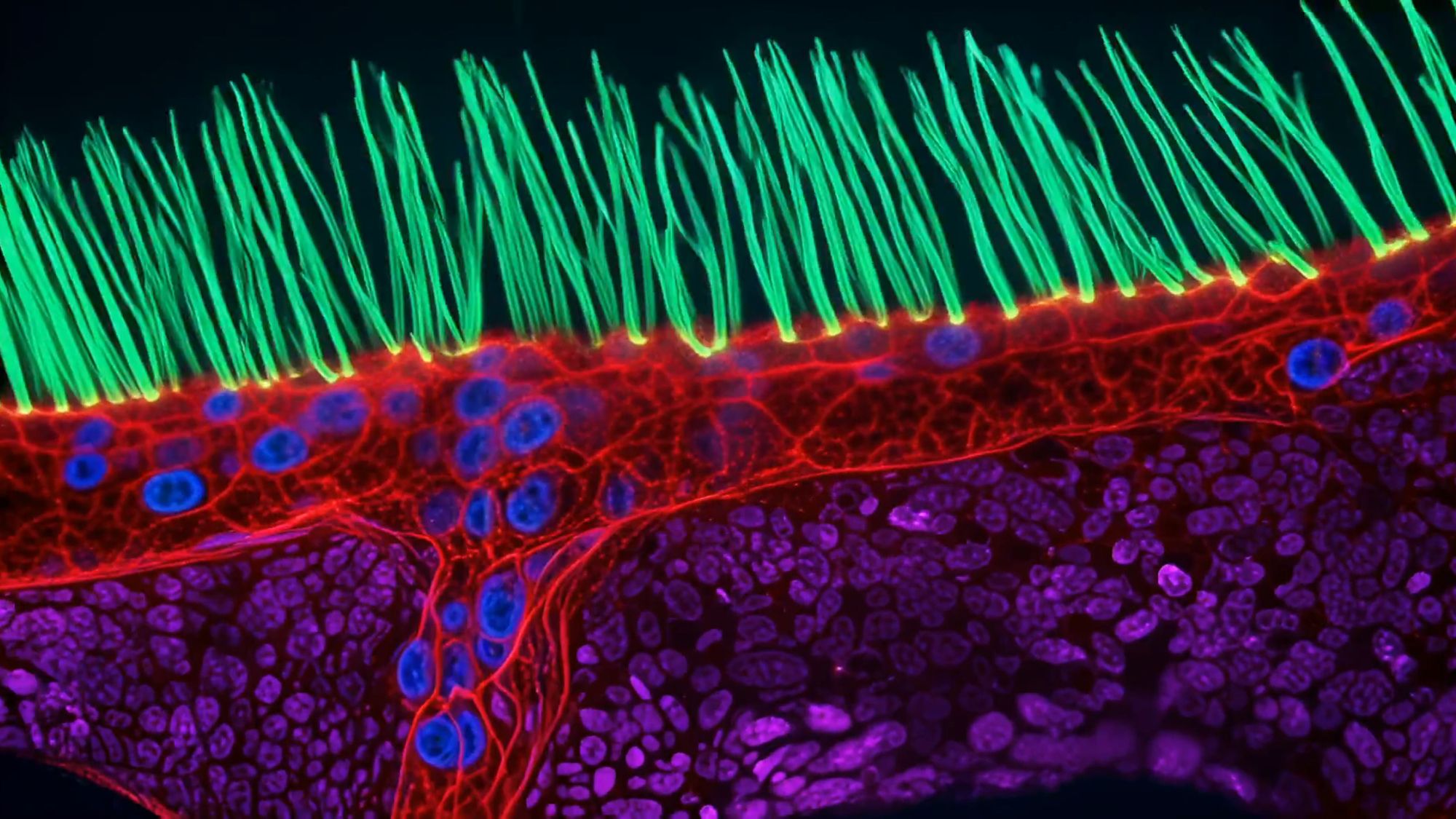
The video, captured at 100x magnification, depicts cilia—tiny hair-like structures—in a child’s airway. Its creator, Dr. Ning Xu of Tsinghua University, said AI was not used to generate the experimental movie, the cilia or their motion. Xu said AI was used to distinguish and visualize features in reconstructed grayscale images.
Nikon said on LinkedIn that it was re-reviewing information from its initial vetting and additional materials supplied by the entrant. The company said Xu had provided technical documentation about the microscopy equipment, imaging methods and processing techniques. Nikon said it planned to update the Small World community next week.
Some scientists have questioned whether the cilia’s movement and appearance accurately reflect known behavior. Edward Phelps, an associate professor at the University of Florida, said elements appeared to “pop in and out of existence” and move between cells. Ian Donovan, a PhD student at UT Southwestern Medical Center, said he had found an embedded SynthID watermark identifying synthetic or AI-generated content.
These are allegations and criticisms; Nikon has not announced a conclusion. The company’s review is ongoing.
Comments
0No comments yet. Be the first to comment.