

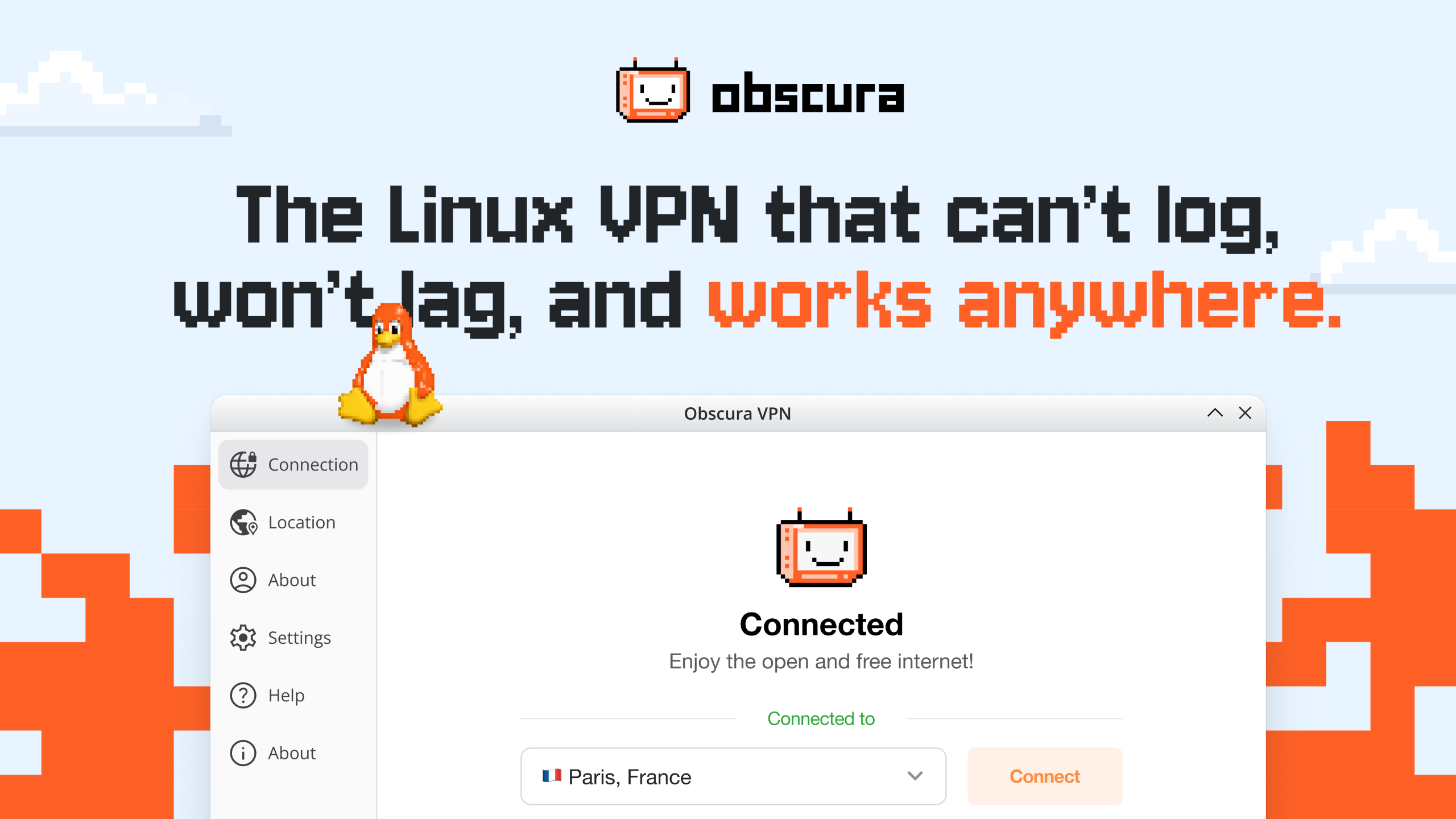
Obscura VPN has launched a native Linux desktop app with a full graphical interface and an experimental command-line interface. The release ends the need for Linux users to connect through a manual WireGuard setup.
The app offers official packages for Debian, Ubuntu, Fedora, and Arch, plus derivatives including Linux Mint, RHEL, Silverblue, CachyOS, and Omarchy. Minimum requirements are Ubuntu 24.04, Debian 13, Fedora 44, and RHEL 10. Installation uses Obscura's own package repository.
The Linux client supports Obscura's QUIC-based stealth protocol, which makes VPN traffic resemble ordinary HTTP/3 browsing. The source says this can help users get past networks that block VPNs. Obscura is offering a limited-time 25% discount with code LINUX26. The service normally costs around $8 per month and has no free tier.
Obscura has also moved its code from the PolyForm Noncommercial License 1.0.0 to the GNU General Public License v3.0, which the company says strengthens its open-source commitment. The code has been public since launch, and GPLv3 gives the community more freedom to inspect, modify, and share it.
Founded by Carl Dong, Obscura first launched on macOS in February 2025 and later expanded to iOS, Android, Windows, and Linux. Its two-party relay sends entry traffic through Obscura and exit traffic through Mullvad VPN. A Cure53 audit found no major security vulnerabilities, according to the source.
Comments
0No comments yet. Be the first to comment.