

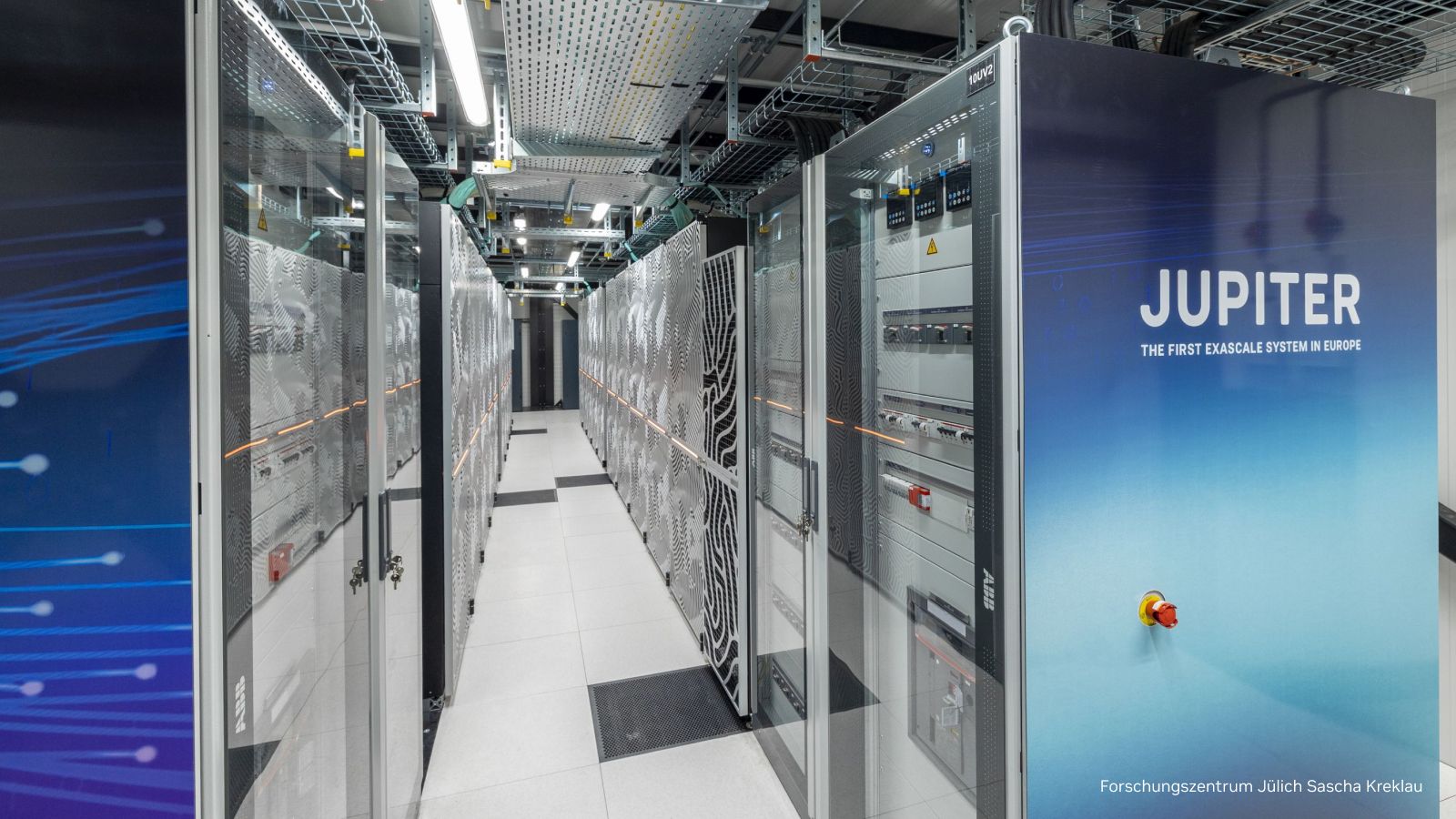
Nvidia researchers simulated a 104-qubit quantum computing system on JUPITER, Europe’s first exascale supercomputer, at Germany’s Jülich Supercomputing Centre. The experiment modeled magic state cultivation, a technique for preparing resources used in fault-tolerant quantum computing.
With realistic hardware noise included, the simulation examined errors that idealized models may not capture. Nvidia says the technique could reduce physical qubit requirements by 90%. The result is a simulation on classical computing hardware, not a test on a functioning quantum processor; further experiments are needed to establish whether the reduction carries over to quantum hardware.
JUPITER used Nvidia GH200 processors, and the researchers scaled their methods to 8,192 GPUs. Before running the larger simulation, the team tested its methods on Nvidia’s GB200 NVL72 system at the company’s Accelerated Quantum Research Center. Nvidia says those preparations shortened simulations that had taken several weeks to just days. The team also used Nvidia cuQuantum software and the CUDA Q platform.
Earlier work at Jülich simulated 50 qubits under ideal conditions. The new result could help researchers assess quantum processor designs before building hardware, though the claimed resource reduction still needs experimental validation.
“Useful quantum computing will require fantastically complex, fault-tolerant systems—and understanding how they behave at scale is essential to building them,” Nvidia CEO and founder Jensen Huang said. He said the Jülich results show how quantum processors and GPU supercomputers can work together on research that would otherwise be out of reach.
Comments
0No comments yet. Be the first to comment.