

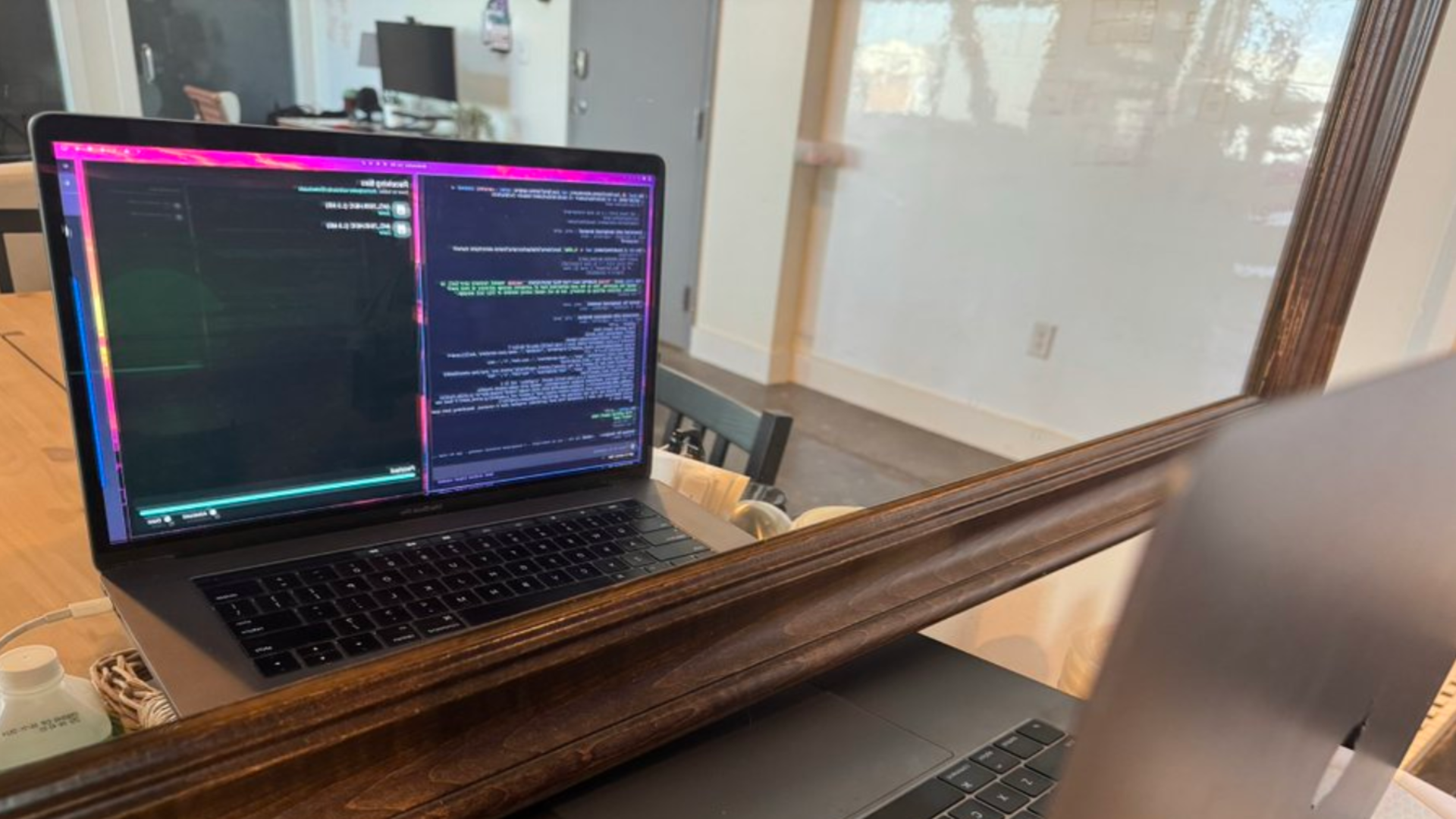
Linux developer Justin Schroeder built a setup that pairs an older Intel MacBook with a mirror and its camera so an AI programming agent can inspect changes to AMD Radeon driver code through the laptop’s display.
The experiment was demonstrated while working on Omarchy, an open-source Linux distribution being adapted for Radeon graphics hardware. The camera points toward a mirror facing the screen, giving the software access to a reflected view of the display.
That visual feedback lets the agent check rendering problems that may not appear in compiler messages or other text-based diagnostics. Such problems can include distorted images, flickering, incorrect resolutions, and other visible signs that graphics software is malfunctioning during testing.
Schroeder said the agent could “see” the altered screen after modifying, rebuilding, and testing the graphics driver code. The workflow is intended to connect automated programming with direct observation of hardware output and may allow repeated checks without a programmer inspecting every intermediate result.
However, the demonstration does not establish how reliably the method scales or show that the agent independently created a production-ready Radeon driver without human involvement. It presents a development technique for giving an AI system visual information about the display while it works on driver code.
Comments
0No comments yet. Be the first to comment.