

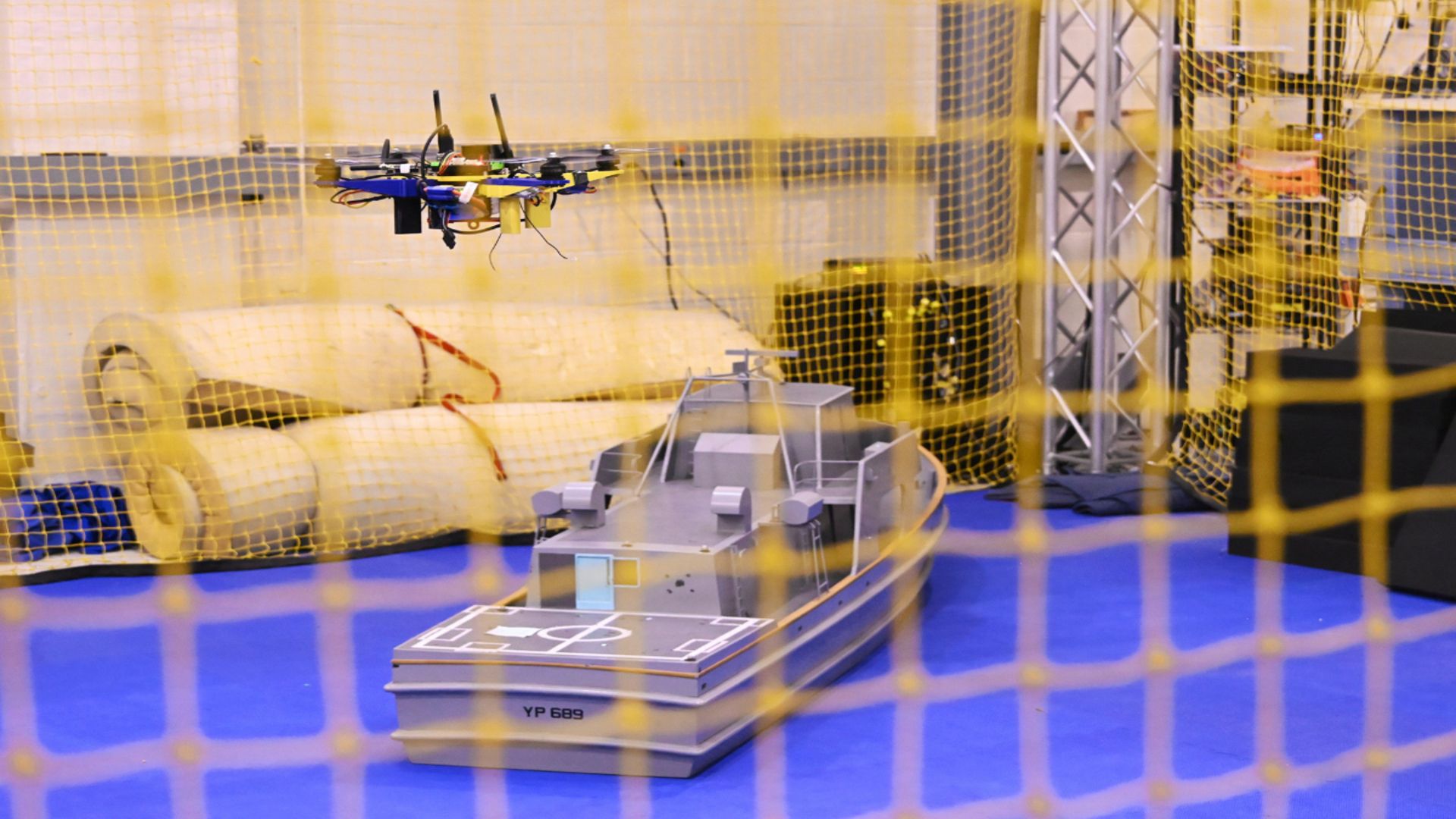
The US Navy has tested software that guides autonomous aircraft onto moving ships using onboard cameras and motion sensors, without satellite navigation. The demonstration suggests the system could help aircraft recover when GPS is unavailable or disrupted.
Engineers at the Naval Air Warfare Center Aircraft Division (NAWCAD) developed software that analyzes a vessel’s visual features and movement, then adjusts an aircraft’s approach to account for a moving deck. NAWCAD said the system could eliminate costly shipboard tracking equipment for some autonomous recovery operations. The Navy still needs to assess its performance in operational testing.
Earlier autonomous recoveries used dedicated equipment. In 2006, an RQ-8A Fire Scout landed aboard USS Nashville with shipborne radar helping establish its position relative to the vessel. The new approach uses equipment already on the aircraft.
“In a high-end maritime conflict, GPS is the first operational link an adversary attempts to sever,” said Peter Arslanian, a NAWCAD aerospace engineer. Rear Adm. Todd Evans, NAWCAD’s commander, said autonomy offers sailors an advantage where satellites and communications are jammed.
NAWCAD plans to move the capability into operational testing. Possible applications include the Navy’s Small Tactical Unmanned Aircraft Systems programme, its Collaborative Combat Aircraft initiative, and the Defense Advanced Research Projects Agency’s Early VTOL Aircraft Demonstration (EVADE). The Naval Innovative Science and Engineering Program and the Office of Naval Research funded the development.
Comments
0No comments yet. Be the first to comment.